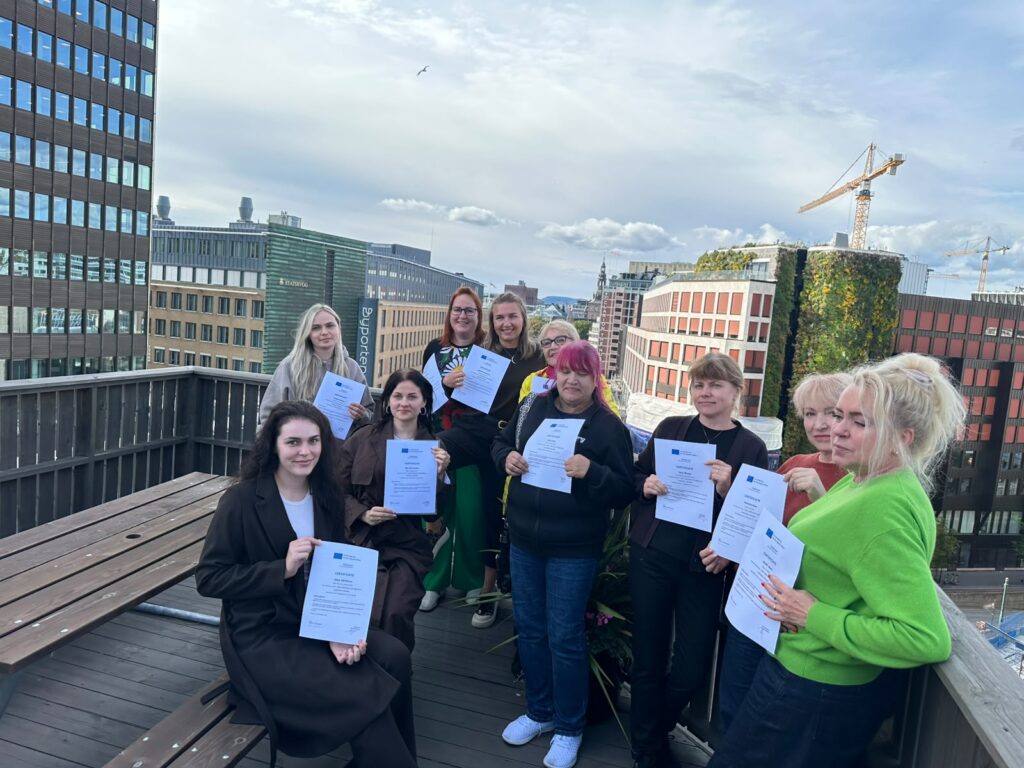
As part of the Erasmus+ programme, SOL Baltics participated in a job-shadowing mobility in Norway, exploring different models for organising cleaning services, work processes, quality management, digitalisation and automation. During the mobility, participants visited three organisations with different profiles: Akershus University Hospital (Ahus), Coor Service Management and Strømmen Upper Secondary School.
The visits provided an opportunity to see how professional cleaning services are organised both through in-house teams and external service providers, and what role clear work organisation, quality standards, employee competence and continuous improvement play in this process.
Akershus University Hospital: Cleaning as Part of Patient Safety
At Akershus University Hospital, or Ahus, cleaning services are part of the hospital’s own Facilities Management (FM) division. The service covers daily and periodic cleaning, disinfection in situations involving infection risks, preparation of patient rooms and 24/7 response capability.
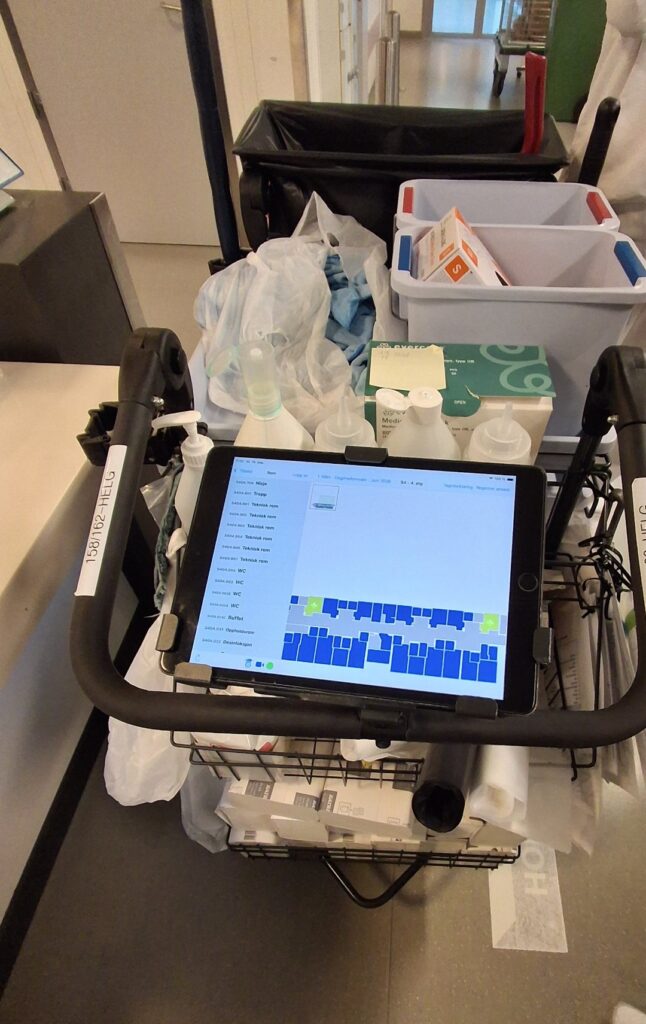
At the hospital, cleaning is viewed primarily as an important part of patient safety and infection control. A digital CleanPilot system is used to organise the work, providing employees with their daily schedules and allowing them to record observations and situations requiring prompt attention during their work. Quality is assessed based on the principles of the INSTA 800 standard.
What stood out particularly at Ahus was the systematic approach to employee requirements. Employees are expected to have at least A2-level Norwegian language skills, digital competence, good physical fitness and the ability to work flexibly. New employees undergo internal hospital training covering, among other things, infection control, specialised cleaning and emergency response.
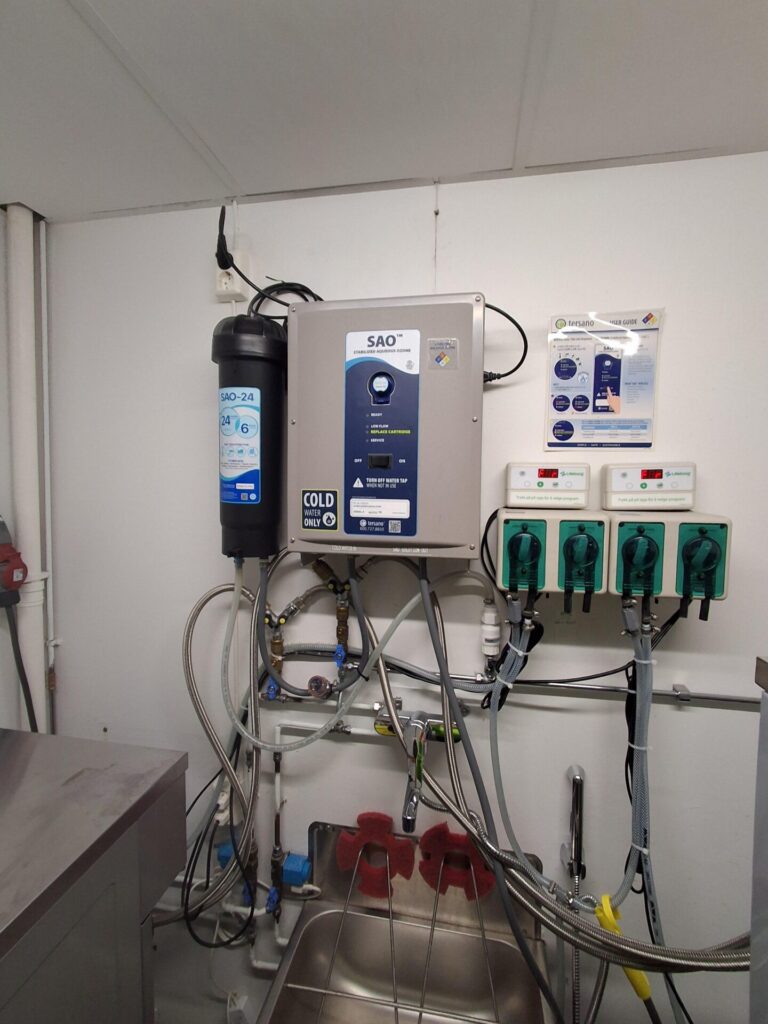
Ahus also uses ionised water. An interesting innovation is the storage of cleaning textiles at +4°C, which helps retain their moisture and prevents excessive wetting of surfaces.
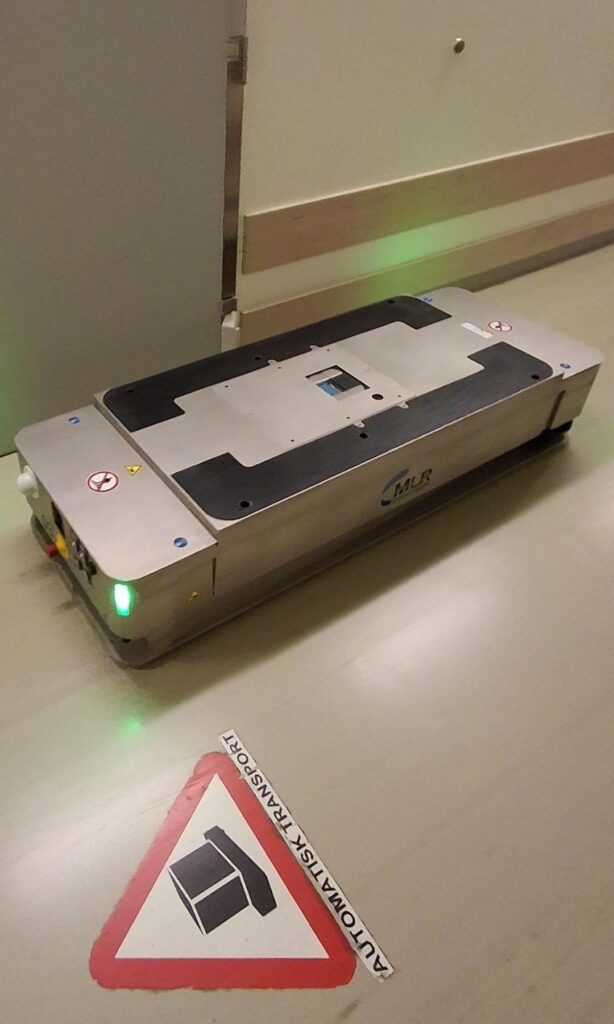
The high level of automation in the hospital’s logistics was also impressive. Robots transport, among other things, bed linen, medicines, equipment and other goods between departments, thereby reducing the amount of manual logistical work.
Coor Service Management: Cleaning as a Comprehensive Solution
Coor Service Management represents a different model, where professional cleaning is part of a broader facility management service provided by an external service provider.
Coor’s approach focuses not only on cleaning surfaces, but also on functional and needs-based cleaning, quality measurement, digitalisation, employee competence, ergonomics, environmental impact and continuous improvement. The INSTA 800 standard is used in most contracts, while CleanPilot is used to plan and monitor the work.
During the mobility, participants had the opportunity to gain practical experience with the use of i-mop, deep cleaning of floors, window cleaning and working according to a digital cleaning plan. One interesting solution was a vehicle equipped with an ionised warm-water system, used for cleaning windows and facades.
At Skøyen Atrium, participants learned about needs-based cleaning and monitoring different levels of cleanliness. Coor’s approach reflected a principle that is also familiar from SOL Baltics’ own practices: the client does not simply purchase cleaning hours, but an agreed cleaning result.
Coor also invests in employees’ language learning and professional development, recognising employee competence as a direct part of service quality.
Strømmen Upper Secondary School: Cleaning by the School’s Own Team
At Strømmen Upper Secondary School, cleaning services are organised as an in-house team and are linked to the organisation of the local municipality.
The five-member cleaning team works between 06:00 and 17:00, starting to clean the premises before students arrive and focusing during the day on common areas and areas that become dirty quickly.
An interesting approach is that students themselves are responsible for keeping their classrooms tidy. Cleaning staff mainly handle waste removal and agreed cleaning tasks. Compared with the visits to Ahus and Coor, the overall level of cleanliness in the classrooms was more modest.
Strømmen Upper Secondary School also uses robotics and digital tools. A self-propelled Rex floor-cleaning machine is used, while the Bella robot is used for carpet cleaning. In addition to planning work, CleanPilot is also used to document tasks and monitor their completion.
The scope and tasks of the cleaning service are based on how the building is used and the agreed service level. The principles of INSTA 800 are also used to assess quality.
What Can We Take Away from the Mobility?
The mobility in Norway provided an opportunity to compare three different models for organising cleaning services and to see how professionalism, digitalisation, automation and quality management influence everyday work.
The experience of the different organisations confirmed that when developing practical skills, it is important to clearly explain and demonstrate the correct working methods, followed by the learner carrying out the task independently with guidance and feedback.
It was particularly valuable to see how different organisations apply these principles in their everyday work and what solutions they use to improve efficiency and maintain quality.
The knowledge and practical experience gained during the mobility provide SOL Baltics with new ideas for developing work processes, digitalisation, automation and quality assessment. International exchange of experience helps us identify new opportunities and bring effective, proven solutions into the everyday work of SOL Baltics.